- Home
- Learning
- Communication
Communication
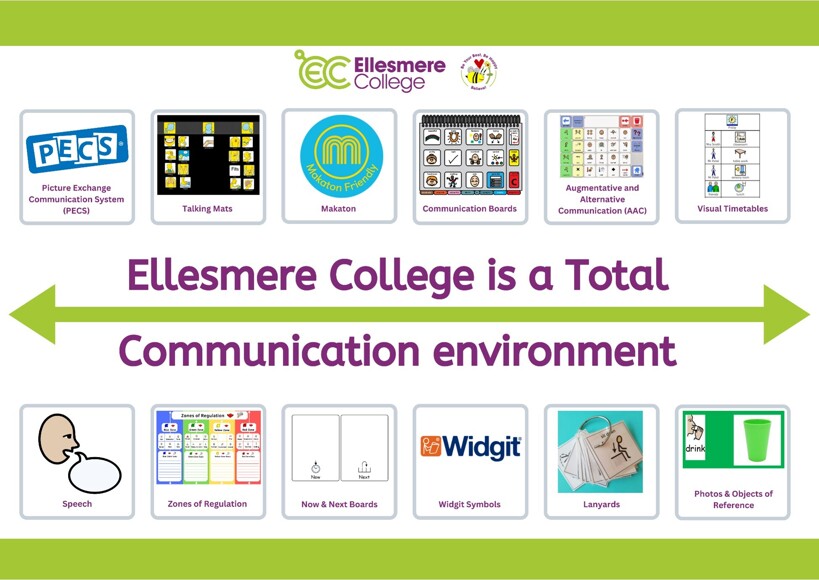
AAC
Augmentative and Alternative Communication (AAC) strategies to support some students who experience challenges with verbal communication. AAC includes a wide range of tools and techniques—from low-tech options like symbol boards and gestures to high-tech devices such as speech-generating tablets.
BSL
For some students who are hard of hearing we use British Sign Language (BSL) as part of our total communication approach. BSL is a visual language used by the Deaf community in the UK, and it plays a vital role in helping students with additional needs access learning and express themselves.
Children's Speech and Language Therapy - Leicestershire Partnership NHS Trust
Within Ellesmere College, the children’s speech and language therapy service support children and young people to:
- develop their understanding and functional communication skills with the people around them.
- access a communication friendly environment that embeds and promotes speech, language and communication development within a variety of activities across the day.
The children’s speech and language therapy service includes therapists and therapy support workers, who work together to assess and support communication and eating and drinking needs.
They provide evidence-based eating and drinking training for school staff to ensure competence and safety.
For children/ young people on the NHS speech and language therapy caseload, the service may carry out the following interventions:
- Offer direct intervention and support where appropriate for speech sounds, stammering or language development in short blocks of intervention. This will be completed by the therapist or support worker alongside classroom staff and/or family members, to ensure these activities and strategies are embedded across the day.
- Specialist assessment of communication, with associated advice and strategies to support areas of need.
- Assessment and intervention for students with Alternative and Augmentative Communication (AAC) needs. Complete referrals for powered AAC assessments with the specialist Electronic Assistive Technology Service (EATS) or a local provider.
- Assessment and implementation of paper-based AAC, including using symbols to request, communication boards and communication books.
- Specialist mealtime assessments, providing strategies and guidance to maximise safe eating, drinking and swallowing.
- After an episode of care has been completed, children/ young people may be discharged from the NHS caseload. The Communication Support Plan or discharge report will outline when further support from speech and language therapy may be needed again in the future.
Reasons to contact the service about a re-referral could be:
- There are speech and language difficulties, such as a stammer or unclear speech and school staff have identified the child/ young person is now ready to access further support.
- Where a child/ young person has no functional communication skills in place.
- A child/ young person has met their previous targets, and guidance is required to understand the best next steps to further develop their functional communication skills.
- Where there are new or deteriorating eating, drinking or swallowing concerns.
Colourful Semantics Basic Information
Communication Boards
What is a Communication Board?
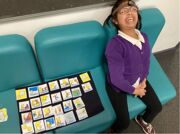
A communication board is a sheet of symbols, pictures or photos that a student will learn to point to, to communicate with those around them.
Why use a communication board?
Speech is difficult for some students. They may find it difficult to make people understand what they are trying to say.
Where do Ellesmere College have Communication Boards?
Classrooms, playgrounds, Therapy Rooms, Soft Play Rooms, Reception
Communication Book -Basic Information
A communication book uses symbols, pictures, and words to help students express their needs, wants, thoughts, and feelings by pointing. It includes core vocabulary (common words) and fringe vocabulary (personalised, expresses preferences and includes topic-specific words). Portable and easy to carry, the book promotes independence, confidence, and reduces anxiety. It also helps students comment on their environment and engage socially, supporting meaningful communication.
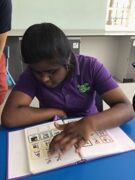
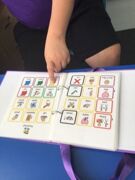
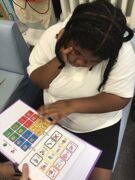
Why use a communication book?
- Speech is difficult for some students.
- Some students may find it difficult to make people understand what they are trying to say.
- Our students might say less than they want to because the words are hard to say.
- If the student is able to show their listener as well as tell them what they are trying to say they are more likely to get their message across.
- Part of the process will be to see if the students qualifies for a referral to EATS (electronic assistive technology service) for a communication aid. This is a long process and a minimum of 6 months evidence of consistent use of communication books
Curiosity & Attention Autism
First, Then, Next, Basic Information
First, Then, Next Boards
To support our students' understanding of routines and transitions, we use First, Then and Next boards as part of our visual communication strategies. These boards are simple yet powerful tools that help students see what is happening now and what will happen next—reducing anxiety and promoting independence. Some students will move onto First/Next/Then Boards when they are ready to.
Key Vocabulary Visuals
All staff have small key vocabulary visuals which feature key Widgit Symbols that represent common needs, emotions, and instructions—making communication more accessible, especially for students with limited verbal language.
These symbols support our students by:
- Providing immediate access to visual communication tools
- Helping students express needs, feelings, and choices in real time
- Supporting understanding during transitions, routines, and social interactions
- Encouraging independence and reducing anxiety in busy environments
These key vocabulary visuals are part of our total communication approach, ensuring that every student has the tools they need to engage confidently and effectively throughout the school day wherever they are.
Language for Thinking Basic Information
Makaton
At Ellesmere we use Makaton signs and symbols to support communication and learning. Below you can find links to videos and PDFs of the key signs and symbols we use at Ellesmere.
 In addition to Ellesmere College holding Makaton Friendly Status, the National Space Centre has now also achieved this recognition. Rachel Hunter has delivered training to their teams and has collaborated with them to introduce Makaton signs and symbols throughout the Space Centre.
Rachel continues to serve as their link tutor and will provide ongoing support to the National Space Centre. We hope this marks the beginning of a growing network of Makaton Friendly environments across our city, helping to improve accessibility for many.
Check out the links below for videos of the key signs and symbols we use at Ellesmere.
Makaton is used across the school. It is a language programme that combines signs, symbols, and speech to make communication more accessible, especially for individuals with additional needs.
By integrating Makaton into everyday interactions, we help students:
- Access learning through multi-modal communication"
- Develop expressive and receptive language skills
- Communicate needs, feelings, and choices more effectively
- Build confidence in social and learning environments
Makaton Core Vocabulary
PECS - Basic Information
Photos and Objects of Reference
Photos and objects of reference support understanding and communication These tools provide concrete, visual cues that help students make connections between language and the world around them.
Play Interaction
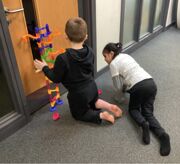
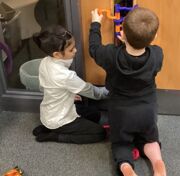
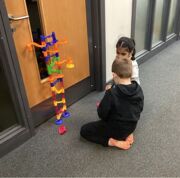
Play interaction gives our students different play based opportunities to help learn and reinforce social interaction skills, understanding language, listening and attention skill and simple problem solving. It can support turn taking, waiting for a turn, co-operating with an adult or peer, listening, attending to a task, following instructions and helps to develop communication skills.
Speech
Helping students communicate is one of the most important parts of their learning journey, especially in special schools. Receptive language is how we understand what others say—whether it’s following instructions, listening to a story, or responding to questions. Expressive language is how we share our own thoughts, feelings, and needs—through words, gestures, or other forms of communication.
For students with additional needs, developing these skills can take time and support. We are focusing on creating a total communication environment, using tailored strategies and therapies to help every student grow in their ability to understand and express themselves.
Talking Mats
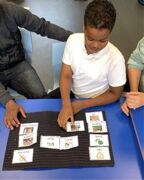
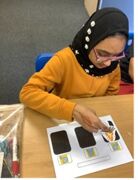
A Talking Mat is a visual communication framework which supports people with communication difficulties to express their feelings and views
Talking Mats can enable our students to:
- Explore and express their feelings, views, and aspirations.
- Have their voices heard, and their voices have a meaningful impact.
- Be involved meaningfully in setting personal outcomes and targets.
- Enabling individual views to be recorded and compared.
- Support preparation for, and monitoring the impact of, transitions.
- Improve communication and investigation of potentially sensitive or difficult issue.
Zones of Regulation
'Zones of Regulation' is a visual system we use at Ellesmere to support students to understand how they are feeling and how to self regulate. Students identify which colour zone they are in and what they need to do to move into the green zone where they are ready to listen and learn.
Please click on the links below for more information
Zones of Regulation - Basic Information
We use the Zones of Regulation to support students' emotional development and regulation. This is a widely respected approach designed to help students recognise, understand, and manage their emotions.
The Zones of Regulation divides emotions and states of alertness into four color-coded zones and the students are taught about each:
- Blue Zone: Low states of alertness (e.g., sad, tired, bored)
- Green Zone: Calm and ready to learn (e.g., happy, focused, content)
- Yellow Zone: Heightened alertness but still in control (e.g., anxious, excited, frustrated)
- Red Zone: Extremely heightened states (e.g., anger, panic, elation)
Widgit Symbols
Widgit Symbols are used to support students in understanding and expressing themselves. These visual symbols are designed to make language more accessible, especially for students with additional needs or limited verbal communication. Widgit Symbols help students by:
- Providing clear visual representations of words and concepts
- Supporting comprehension of instructions, routines, and learning materials
- Enhancing expressive communication through symbol-supported choices and responses
- Promoting independence and confidence in everyday interactions
We use Inprint 4 software to support us at Ellesmere.
Visual Timetables
We use Visual Timetables across our school to support students in understanding their daily routines and transitions. These timetables provide a clear, structured overview of the day using visual cues such as Widgit symbols, photos, or objects—making abstract concepts like time and sequence more concrete and accessible.
Visual timetables help students by:
- Reducing anxiety through predictable routines
- Supporting comprehension of what is happening and when
- Encouraging independence and self-management
- Enhancing engagement and focus throughout the day
NHS SALT Flyers
Here is a range of information about SALT that you may find useful:
Supporting a Child to understand language
Supporting a Childs Vocabulary Development
Supporting Listening and Attention